Two neighbours on Sturges Avenue in Mansfield replaced their roofs in the same month, spring 2022. Same street. Same house age (both built in 1978). Same approximate square footage. Same Ohio weather is hitting both properties every day.
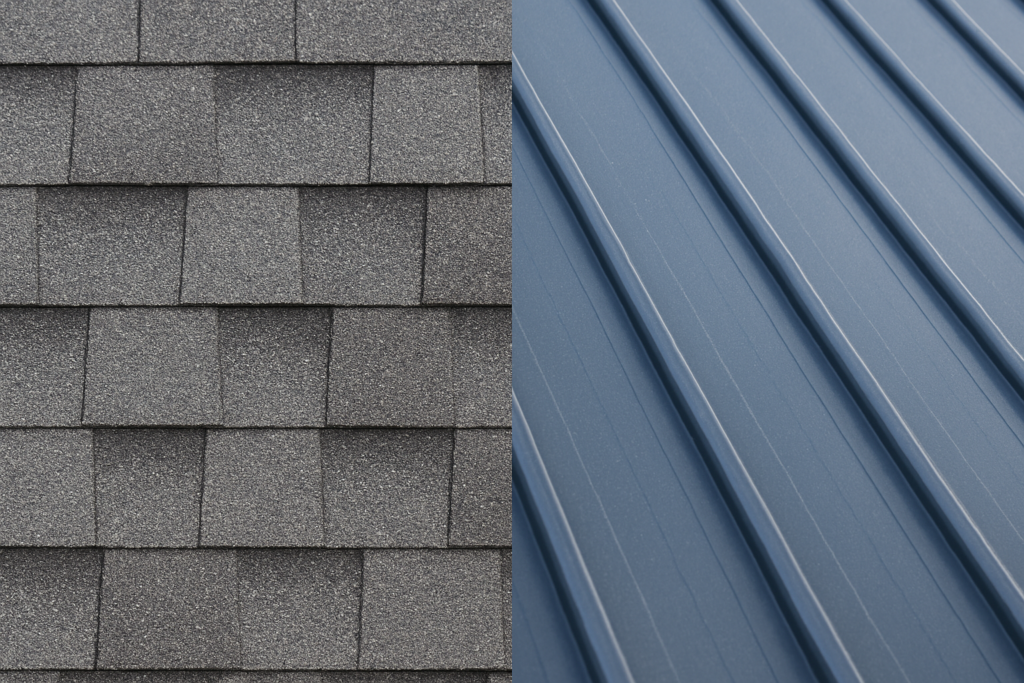
The first homeowner chose standard architectural asphalt shingles. Total project cost: $14,200. The second neighbour went with a standing seam steel roof. Total project cost: $31,800. A third neighbour, three doors down, watching both projects from her porch, asked her contractor why anyone would pay $17,600 more for a roof.
Her contractor’s answer changed how she thought about every major home improvement decision she would ever make: “The cheaper roof will need replacement again in 20 to 25 years. The metal roof has a realistic 50-year lifespan on this street. Run the math across your remaining years in the house, and the metal roof is cheaper if you stay more than 15 years.”
She stayed. She chose metal. And the question she asked that day is exactly the right question for every Ohio homeowner facing a roofing decision: not what does this cost today, but what does it cost across the full service life of the roof in Ohio’s specific climate?
This guide works through that math honestly for asphalt, metal, and slate in Ohio’s environment, with real numbers, real tradeoffs, and the recommendation that most guides are too cautious to make.
What Makes Ohio’s Climate Uniquely Demanding for Roofing Materials?
Ohio is one of the most challenging roofing climates in the continental United States. The state combines four distinct stress categories that, together, create a filtration environment where only the right material performs reliably over its intended lifespan.
The freeze thaw cycle is the primary stress mechanism. Richland County experiences approximately 80 to 100 freeze thaw transitions per year from November through March. Each cycle expands moisture inside microscopic material imperfections and contracts it again. Over 20 winters, the cumulative stress on asphalt, metal fasteners, or natural stone differs dramatically by material.
Hail frequency is the second stress factor. Ohio sits on the western edge of Tornado Alley’s influence, and severe hail events occur multiple times per year across the state. The hail insurance claim rate in Ohio consistently ranks among the highest in the Midwest. Material hardness and impact resistance directly determine how each roofing system survives these events.
Thermal range is the third factor. Ohio rooftops experience temperatures from minus 15 degrees Fahrenheit in hard winters to 150 degrees Fahrenheit on dark-surfaced roofs in July. That 165-degree annual range stresses material expansion joints, sealants, fastener connections, and substrate bonds in ways that moderate climates never produce.
Snow and ice load is the fourth factor. Mansfield and Richland County receive 36 to 50 inches of snow annually. Ice dam formation, snow weight loading, and the corrosive effect of ice melt chemicals that migrate from driveways onto roofing surfaces are all Ohio-specific considerations.
Asphalt Shingles in Ohio: What You Get for the Price
Most Ohio homeowners choose asphalt shingles not because they are the best material for Ohio’s climate, but because they are affordable and familiar. That is a legitimate reason to choose them. It is not the same as saying they are the optimal choice.
Architectural asphalt shingles carry manufacturer lifespan ratings of 25 to 30 years. In Ohio’s actual climate, the realistic lifespan on a properly installed, properly ventilated architectural shingle roof is 20 to 28 years, depending on exposure, shade, ventilation quality, and maintenance history.
Three tab asphalt shingles have a realistic Ohio lifespan of 13 to 18 years. If a contractor proposes three tab asphalt shingles on your Ohio home in 2025 or 2026, ask why. The material cost differential between three tab and architectural shingles is approximately $800 to $1,200 on an average Mansfield home. For a material that lasts 5 to 10 years longer, that premium is always worth paying.
Within the architectural shingle category, product quality varies significantly. GAF Timberline HDZ with a Class 4 impact resistance rating represents the current performance ceiling for Ohio applications. It carries a Lifetime limited warranty, a 130 mph wind resistance rating, and StainGuard Plus algae resistance protection. Owens Corning Duration with WeatherGuard HP and CertainTeed Landmark Pro with SureStart Plus warranty coverage are the other products that consistently perform well in Ohio hail and freeze thaw conditions.
The installation cost advantage is real and significant. A quality architectural shingle roof on an average 1,800 square foot Mansfield home runs $14,000 to $20,000 installed as of early 2026. That entry point makes asphalt the right choice for budget-constrained homeowners, homeowners planning to sell within 10 years, and situations where the structural load capacity of the existing framing cannot support heavier materials.
Metal Roofing in Ohio: The Long Game Material
Here is the counterintuitive truth about metal roofing in Ohio it is specifically well suited to the climate stressors that make asphalt vulnerable. Metal does not crack from freeze thaw cycling. Steel and aluminium maintain structural integrity at minus 40 degrees Fahrenheit. Metal does not lose protective granules because it has none to lose. Metal sheds snow efficiently, reducing ice dam formation risk. Modern steel roofing with Galvalume or Kynar coating systems resists the surface corrosion that older generations of metal roofing experienced in humid Ohio conditions.
Standing seam steel roofing is the premium choice. The concealed fastener design, in which the metal panels attach to the roof deck via a clip that allows thermal expansion and contraction movement, eliminates the fastener-seal failure that older exposed-fastener systems experienced in Ohio’s thermal range. Standing seam profiles from Berridge Manufacturing, McElroy Metal, and Metal Sales Manufacturing with Kynar 500 coating systems carry 40 to 50-year paint finish warranties and realistic service lives of 50 to 70 years. Installed cost on an average Mansfield home: $28,000 to $42,000 as of early 2026.
Steel shingle panels and stone coated steel products (Gerard, Decra, and EDCO Steel Shingles being the most widely installed in Ohio) offer a compromise position: metal durability with an aesthetic that resembles traditional asphalt or wood shakes. These products carry Class 4 impact resistance ratings, their concealed fastener designs handle thermal movement, and their installed cost ($18,000 to $28,000) bridges the gap between asphalt and full standing seam systems.
The concerns about metal roofing in Ohio deserve honest discussion. Noise is a real consideration on some structures: a standing seam roof over an open rafter attic without dense insulation will transmit rain and hail sound more than asphalt over the same structure. With proper attic insulation, the noise difference is minimal. Condensation risk on metal surfaces is also real in poorly ventilated attic spaces, and is addressed by the same balanced ventilation approach that prevents ice dam formation.
The financial analysis on metal versus asphalt strongly favours metal for homeowners planning to remain for more than 12 to 15 years. An asphalt roof at $17,000 with a 22-year realistic lifespan costs roughly $773 per year of service. A standing seam metal roof at $35,000 with a 55-year realistic lifespan costs roughly $636 per year of service and likely never needs replacement in the owner’s lifetime.
Slate Roofing in Ohio: The Truth About the Most Beautiful Option
Slate is the roofing material that Ohio homeowners admire on historic properties in downtown Mansfield, in the older neighbourhoods near Kingwood Centre, and on century old homes that have outlasted multiple generations of owners. Natural slate is extraordinarily beautiful and legitimately lasts 75 to 150 years when properly installed and maintained.
But slate in Ohio requires specific conditions to be a rational choice, and those conditions are narrower than most homeowners realise.
The structural requirement is the first filter. Natural slate weighs 700 to 1,600 pounds per square (100 square feet of roof area), compared to asphalt at 230 to 400 pounds per square and standing seam metal at 100 to 150 pounds per square. Most Ohio homes built after 1950 were not framed to carry this load. A structural engineering assessment ($300 to $500) is required before any natural slate installation on a non-historic Ohio home, and framing reinforcement adds $2,000 to $10,000 or more to the project cost.
The installation expertise requirement is the second filter. Slate installation is a highly specialized trade. The number of Ohio roofing contractors with genuine slate installation competency is small. Improperly installed slate, particularly at flashing intersections and ridge details, fails within five to ten years regardless of the material’s inherent lifespan.
The cost reality is the third filter. Natural slate installation on an average Ohio home runs $45,000 to $90,000 installed. This makes financial sense only if you plan to remain in the home for 40 or more years, the home’s architectural character justifies the premium, and structural requirements are already met by existing framing.
Synthetic slate from DaVinci Roofscapes, CertainTeed Landmark Solaris, and Boral TruSlate offers a legitimate middle path. These polymer or composite products replicate slate appearance with weights comparable to heavy asphalt shingles (360 to 500 pounds per square), carry 50-year product warranties, and install using conventional techniques. Installed cost on an average Mansfield home: $20,000 to $35,000.
The Full Comparison: Asphalt vs. Metal vs. Slate for Ohio Homes
| Factor | Arch. Asphalt | Standing Seam Metal | Steel Shingles | Natural Slate | Synthetic Slate |
| Installed cost (avg OH home) | $14K–$20K | $28K–$42K | $18K–$28K | $45K–$90K | $20K–$35K |
| Ohio realistic lifespan | 20–28 years | 50–70 years | 35–50 years | 75–150 years | 40–50 years |
| Cost per year of service | $625–$800 | $530–$700 | $450–$720 | $400–$750 | $450–$750 |
| Freeze-thaw performance | Moderate | Excellent | Excellent | Excellent | Very good |
| Hail resistance (Class 4) | Available | Inherent | Inherent | Very good | Available |
| Snow shedding | Moderate | Excellent | Good | Good | Good |
| Structural requirement | Standard | Standard | Standard | Reinforcement often needed | Standard |
| Energy efficiency | Moderate | High (cool roof) | High | Moderate | Moderate |
| Best candidate | Budget; shorter stay | Long-term owners | Balance seekers | Historic; long-term | Slate look; standard framing |
What the Resale Value Research Actually Shows
Every roofing material comparison eventually arrives at the resale value question, and the honest answer is more nuanced than the real estate industry typically acknowledges.
A Remodelling Magazine Cost vs. Value Report showed that asphalt shingle replacement returns approximately 68 percent of cost at resale. Metal roofing returns approximately 61 percent of cost at resale nationally. These numbers suggest that asphalt outperforms metal on resale value recapture at the national level.
Here is what that national data misses about the Ohio market: buyers in Ohio’s established neighbourhoods, particularly in Mansfield’s North End and West Side historic areas, are making decisions about homes they expect to own for 20 or more years. A metal roof or synthetic slate roof that eliminates the need for another $20,000 to $35,000 replacement during their ownership period is a significant financial advantage that motivates offers, even if it does not generate a direct dollar-for-dollar premium at sale.
The honest resale advice for Mansfield homeowners: if you are replacing a roof primarily to sell within two to three years, choose quality architectural asphalt shingles. If you plan to own the home for a decade or more, the long-term economics of metal or synthetic slate become increasingly compelling with every year you stay.
Frequently Asked Questions: Roofing Material Comparison for Ohio
What is the best roofing material for Ohio weather?
For most Ohio homeowners planning to stay in their home for more than 15 years, standing seam steel or high-quality steel shingle panels represent the best combination of Ohio-climate performance, long-term cost efficiency, and practical installation. Architectural asphalt shingles from GAF, Owens Corning, or CertainTeed with Class 4 impact resistance remain the best choice for budget-constrained projects or shorter ownership horizons.
How long do asphalt shingles last in Ohio?
Architectural asphalt shingles have a realistic Ohio lifespan of 20 to 28 years, with quality products from GAF, Owens Corning, and CertainTeed performing at the higher end. Three-tab asphalt shingles last 13 to 18 years. Both figures represent shorter lifespans than manufacturer warranty projections suggest because Ohio’s 80 to 100 annual freeze-thaw cycles accelerate granule loss and asphalt degradation beyond what moderate-climate projections assume.
Is metal roofing worth the cost in Ohio?
For homeowners planning to stay more than 12 to 15 years, yes. The per-year service cost of quality steel roofing is comparable to or lower than that of asphalt when calculated across the full service life. Metal also eliminates one or two future re-roofing projects and associated disposal costs. For homeowners planning to sell within 10 years, the cost premium does not typically recoup at sale, making asphalt the more financially rational choice.
Does slate roofing work well in Ohio winters?
Natural slate performs exceptionally well in Ohio winters when properly installed on structurally adequate framing. The material is freeze-thaw impervious, handles Ohio’s snow and ice loads well, and outlasts all other roofing options. The barriers in Ohio are structural requirements (most post-1950 homes need framing reinforcement), installation expertise availability, and upfront cost ($45,000 to $90,000). Synthetic slate from DaVinci or CertainTeed provides comparable aesthetics with standard structural requirements at $20,000 to $35,000.
What roofing material is best for Ohio hail and ice?
Metal roofing systems, specifically steel panels and standing seam profiles, offer the strongest inherent protection against both Ohio hail and ice-related damage. Steel does not dent from standard hail events and is immune to the granule loss that accelerates asphalt degradation after repeated hail exposure. For asphalt, Class 4 impact-resistant products (GAF Timberline HDZ, Owens Corning Duration with WeatherGuard HP) provide the best available hail protection within the asphalt category.
How much does metal roofing cost compared to asphalt in Ohio?
On an average 1,800 square foot Mansfield home, quality architectural asphalt shingles run $14,000 to $20,000 installed. Standing seam steel runs $28,000 to $42,000. Steel shingle panels run $18,000 to $28,000. The $14,000 to $22,000 premium for metal over asphalt represents roughly 0.5 to 1.0 additional asphalt replacement cycles over a 50-year period, making the lifetime cost difference narrower than the initial price gap suggests.
What is the most energy-efficient roofing material for Ohio homes?
Standing seam metal roofing with cool-roof coating systems reflects significantly more solar radiation than standard asphalt, reducing summer cooling loads. Kynar 500 coating systems in light colours achieve solar reflectance values of 60 to 70 percent, compared to 5 to 15 percent for standard dark asphalt. This efficiency difference typically reduces summer cooling costs by 15 to 25 percent compared to dark asphalt on the same structure.
Which roof material holds up best in Ohio freeze-thaw conditions?
Metal and natural or synthetic slate are the clear leaders in Ohio freeze-thaw performance. Both materials are dimensionally stable at Ohio winter temperatures, do not become brittle, and do not contain the granule and limestone components that freeze-thaw cycling degrades in asphalt shingles. Among asphalt products, Class 4 impact-resistant architectural shingles with reinforced mat construction handle freeze-thaw cycling better than standard asphalt due to higher material density and flexibility.
The Recommendation Most Guides Are Too Cautious to Make
The Sturges Avenue neighbour who asked why anyone would pay $17,600 more for a roof asked the right question at the wrong level of analysis. The right question is not about the purchase price. It is about the total ownership cost across the years you will actually live under that roof.
For Ohio homeowners planning to stay in their home for 15 or more years, metal roofing is the superior investment in nearly every financial analysis, and it is certainly the superior material choice for Ohio’s climate. The freeze-thaw performance advantage is real and compounding. The hail resistance advantage is relevant given Ohio’s storm frequency. The maintenance cost reduction is real. And the elimination of one or two future re-roofing disruptions and costs is real.
Asphalt makes sense for budget-constrained situations and for homeowners with a shorter ownership horizon. Slate makes sense for historic properties with the right structural and budgetary foundation. Synthetic slate bridges the gap for homeowners who want long-term performance without natural slate’s requirements.
The decision that most Ohio homeowners make, standard architectural asphalt based primarily on upfront cost, is defensible. It is not always optimal. The homeowner who does the lifetime cost analysis before signing a roofing contract almost always makes a better decision than the one who compares only the line items on the estimate.
Which roofing material is on your Ohio home right now, and what has its performance been through Ohio winters? Have you done the lifetime cost analysis? Leave your experience in the comments below.
Pricing reflects Mansfield, Ohio market conditions and material costs as of early 2026. Lifespan estimates reflect Ohio climate performance. Consult a licensed Ohio roofing contractor and structural engineer where indicated before making final material decisions.