
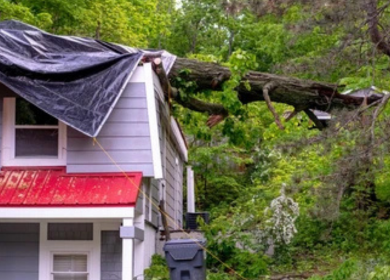
A homeowner in Delaware County, Ohio filed a storm damage roof insurance claim in May 2023 after a severe hail event dropped 1.5-inch hailstones across central Ohio. The storm was well-documented. The damage was obvious: dented gutters, cracked skylights, and shingles that looked like someone had taken a ball-peen hammer to them across the entire north and west facing sections of the roof.
His insurance company offered $4,800. The replacement estimate from two independent Ohio roofing contractors came in at $19,200 and $21,400, respectively.
He had done everything wrong, not because he was careless, but because nobody had told him the rules of this particular game before he started playing it. He called the insurance company before documenting the damage himself. He let the adjuster inspect the roof alone. He accepted the initial scope without requesting the complete adjuster report. He did not know what recoverable depreciation was, let alone how to claim it.
After hiring a public adjuster six weeks later and working through the appeal process, his final settlement came in at $17,800. That $13,000 gap between the initial offer and the final settlement represents the value of knowing the process before you start it.
This guide is the information that the homeowner needed before he picked up the phone. Follow these steps in sequence, and you position yourself to receive what your policy actually owes you.
Step 1: Document the Damage Before You Call Anyone
This is the step most Ohio homeowners skip entirely, and it is the most consequential mistake you can make in a storm damage roof insurance claim.
Within 24 to 48 hours of the storm event, photograph every observable piece of damage before any cleanup, tarping, or repair work begins. Use your smartphone with location services enabled so every photo carries a GPS-embedded timestamp.
Cover the full exterior from all four sides at ground level, close-up shots of every identifiable impact point or displaced shingle, interior views of any water staining or ceiling damage with the date and time visible in the frame, your gutters and downspouts showing granule accumulation and any physical deformation, all secondary structures that took damage (detached garages, sheds, HVAC units, fence caps, and window screens), and attic access views showing any moisture, daylight, or decking damage visible from below.
Video is equally valuable and often more compelling than still photos. Walk the perimeter of the home, narrating what you observe.
Capture the official weather record for your storm date. The National Weather Service Storm Events Database at ncdc.noaa.gov maintains searchable records by county and date showing hail size, wind speed, and precipitation data. Download and save this record. An insurance adjuster cannot dismiss officially recorded 1.75-inch hail hitting your county on a specific date.
Here is the insider detail that most guides never mention: photograph neighbouring properties showing similar damage patterns. If the houses on both sides show granule accumulation, dented gutters, and damaged outdoor furniture from the same storm event, that environmental evidence supports the conclusion that your roof damage is storm-related rather than pre-existing wear.
Step 2: Hire a Licensed Ohio Roofing Contractor for an Independent Inspection Report
Do this before the insurance adjuster arrives. This step alone, more than any other single action, changes claim outcomes in Ohio.
A professional inspection report from a licensed Ohio roofing contractor documents impact density across the roof surface, identifies specific storm-related damage patterns distinct from pre-existing wear, measures the total affected area with supporting photographs, provides a complete material and labor replacement estimate, and establishes a written professional baseline that the adjuster must address rather than simply override.
The adjuster is a trained professional whose full-time job involves managing claim payouts. They know how to identify pre-existing conditions, how to limit the scope of covered damage to the smallest defensible area, and how to use your own uncertainty against you when you speculate about the age or condition of damaged components.
A contractor’s written inspection report eliminates your uncertainty. When the adjuster says, “That section looks like normal wear to me,” you can respond, “My contractor’s inspection report documents this as consistent with impact damage from the May 14 event. Can you document your basis for characterising it as pre-existing?” That is a fundamentally different conversation than nodding along to the adjuster’s observations without a professional counter-assessment in hand.
Inspection fees from Ohio roofing contractors range from complimentary to $150 to $350 for a formal written report. Get the written report with photos, not just an oral assessment.
Step 3: File Your Notice of Claim Promptly
Contact your insurance company to file a notice of loss within 48 to 72 hours of discovering damage. This timing matters for two distinct reasons.
First, your policy almost certainly contains a prompt notice provision requiring you to report a loss as soon as practicable or within a specific number of days. Missing this notification window can give the insurer grounds to deny your claim entirely, regardless of whether the damage is genuine and covered. Ohio’s two-year statute of limitations under Ohio Revised Code 3937.18 sounds generous, but your policy’s internal prompt notice requirement is the operative deadline.
Second, filing promptly establishes the claim date of record. If your claim is later disputed or appealed, having a documented notification date from immediately after the storm event supports the connection between the storm and the damage.
When you call to file the notice, use neutral factual language. Report what you observed and when. Do not speculate about cause, extent, or your opinion of what the insurer owes. You are filing a notice of loss, not accepting an offer or agreeing to a scope.
Step 4: Understand Your Policy Before the Adjuster Arrives
Pull your declarations page and your policy document before the adjuster inspection. Two things matter most.
Your coverage type. Replacement Cost Value (RCV) policies pay what it costs to restore your roof to its pre-damage condition using current materials and labour. Actual Cash Value (ACV) policies deduct depreciation and pay only the current market value of the aged roof system. On an RCV policy, the insurer makes an initial payment that includes a depreciation holdback, called recoverable depreciation, which is released when you complete repairs and submit documentation. This recoverable depreciation, often $4,000 to $9,000 on an average Ohio re-roof, must be actively claimed. It is not sent automatically.
Your deductible structure. Ohio policies increasingly carry percentage deductibles for wind and hail events rather than flat dollar deductibles. A 2 percent wind/hail deductible on a home insured for $300,000 means your deductible is $6,000, not whatever flat deductible applies to other claims. If you are not certain what deductible applies to storm damage claims, ask your agent directly before the adjuster inspection.
Step 5: Be Present and Prepared During the Adjuster Inspection
The adjuster inspection is the most consequential 30 to 45 minutes of your entire claim process. You have the right to be present. Use it.
Have three things in hand when the adjuster arrives: your contractor’s written inspection report with photographs, the downloaded NWS storm event data for your date and county, and a written list of all damage items you documented in Step 1.
Walk the property with the adjuster. When they begin examining the roof, you are there to ensure the inspection is complete and documented. When the adjuster moves to leave without examining sections your contractor identified, you can say: “My contractor’s report identified impact damage in the valley section on the south slope that I don’t think we’ve covered yet. Can we take a look?”
Ask the adjuster directly whether they will be going into the attic. Many do not. Interior evidence of moisture intrusion, damage to the decking visible from below, and ventilation system damage are all legitimate damage elements. Ask for the adjuster’s business card and request a copy of their completed inspection report. You are entitled to this document.
Step 6: Review the Adjuster’s Report and Settlement Offer Critically
When the insurer’s initial settlement offer arrives, do not accept it immediately. Read the complete adjuster’s scope of loss document against your contractor’s inspection report.
Specific items to examine: the depreciation percentage applied to each line item and whether it is reasonable for your roof’s age and condition, the unit costs used for materials and labor (Xactimate software pricing, which most Ohio insurers use, may not reflect current market rates for materials and contractor labor), any line items your contractor identified that do not appear in the adjuster’s scope, and any damage categorized as pre-existing that your contractor documented as storm-related.
In Ohio’s claims environment, adjusters commonly undercount the square footage of damaged area, apply aggressive depreciation to partially damaged sections, exclude secondary damage items like gutters and flashing from initial scopes, and categorize granule loss as pre-existing wear rather than storm impact erosion.
Document every discrepancy between the adjuster’s report and your contractor’s assessment in writing before responding to the offer.
Step 7: File a Supplemental Claim or Formal Appeal if Necessary
A low initial offer or incomplete scope is not the final answer. Ohio homeowners have multiple escalation pathways.
Formal written appeal to your insurer addresses each point of discrepancy with specific supporting documentation. Most Ohio insurers have a formal claims review process that produces a response within 15 to 30 days.
Ohio Department of Insurance complaint at insurance.ohio.gov. The ODI investigates consumer complaints involving insurer conduct and has enforcement authority over unfair claims practices. Many claims that were underpaid at the adjuster level resolve through ODI intervention without litigation.
The appraisal process is available under most Ohio policies when you and the insurer agree that coverage exists but disagree on the amount. Each party selects an independent appraiser, and those two appraisers select an umpire. The umpire’s decision is binding, and the process typically resolves within 60 to 90 days.
A public adjuster is a licensed professional who represents your interests rather than the insurer’s. Ohio public adjusters charge contingency fees of 10 to 15 percent of the final settlement. On the Delaware County homeowner’s claim, the public adjuster’s $13,000 settlement improvement produced a net gain of roughly $11,000 after their fee. Verify any Ohio public adjuster’s license through the ODI licensee lookup before engaging.
The Complete Ohio Storm Damage Claim Timeline
| Stage | Action | Timing | Notes |
| Immediate | Document damage photographically | Within 24–48 hours of storm | Before any repairs or tarping |
| Within 48 hrs | Capture NWS weather event record | Day 1 to 2 | ncdc.noaa.gov, search by county and date |
| Within 72 hrs | File notice of loss with insurer | Day 1 to 3 | Bring the contractor report and NWS data |
| Before adjuster | Preserves the prompt notice requirement | Day 3 to 10 | Written report with photos required |
| Before adjuster | Review policy coverage type and deductible | Day 3 to 7 | RCV vs ACV, wind/hail deductible percentage |
| Adjuster day | Within 5 days of receiving the report | Scheduled | Be present during the inspection |
| Post-inspection | Review adjuster’s scope vs contractor’s | File a written appeal | Document all discrepancies in writing |
| If underpaid | Within 30 days of the offer | File an ODI complaint or invoke appraisal | Address each discrepancy specifically |
| Submit contractor invoices to the insurer | If the appeal fails | Within 60 days of denial | insurance.ohio.gov |
| After repairs | Claim recoverable depreciation (RCV) | Within policy window (180–365 days) | Submit contractor invoices to insurer |
The Most Common Mistakes Ohio Homeowners Make on Storm Damage Claims
Calling the insurance company before documenting damage is the most costly mistake. The insurer’s first report establishes the initial characterisation of the damage, and that characterisation is difficult to expand later.
Allowing the adjuster to inspect alone is the second most costly mistake. What an adjuster examines and records is entirely at their discretion if no one else is present.
Accepting the initial offer without reading the complete scope is the third most costly mistake. The initial check is not the final settlement on an RCV policy, but many Ohio homeowners cash the first check, believing the claim is closed.
Signing any contractor agreement that includes language authorising the contractor to negotiate your insurance claim directly is the fourth mistake. Ohio law permits licensed roofing contractors to provide damage assessments and estimates, but does not permit them to act as your insurance representative.
Waiting more than two weeks to seek help when a claim feels wrong is the fifth mistake. The documentation is freshest immediately after the storm, and adjusters’ schedules fill quickly after major Ohio weather events.
Frequently Asked Questions: Storm Damage Roof Insurance Claims in Ohio
How do I file a storm damage roof insurance claim in Ohio?
Document all damage photographically within 24 to 48 hours of the storm, including GPS-timestamped photos and official National Weather Service storm data for your county and date. Hire a licensed Ohio roofing contractor for an independent written inspection report before the adjuster arrives. File your notice of loss with your insurer within 72 hours. Be present during the adjuster inspection with documentation in hand. Review the settlement offer against your contractor’s report and appeal any discrepancies in writing.
How long do I have to file a roof damage claim in Ohio?
Ohio’s statute of limitations for property insurance claims is two years from the date of loss under Ohio Revised Code 3937.18. However, your policy’s prompt-notice provision is far more restrictive, requiring notification as soon as practicable or within a specified number of days. File your notice of loss within 48 to 72 hours of discovering storm damage to comply with the prompt notice requirement and protect your rights under the policy.
Does Ohio homeowner’s insurance cover hail damage to a roof?
Yes, hail is a covered peril under standard Ohio homeowner’s insurance policies. The common dispute is whether specific shingle damage is attributable to the hail event or to pre-existing wear. Official National Weather Service storm data documenting the hail event and a professional contractor inspection report identifying impact-specific damage patterns significantly strengthen hail damage claims. Note that policies with percentage-based wind/hail deductibles may reduce your net payout significantly compared to your total damage amount.
What roof damage is not covered by insurance in Ohio?
Gradual wear and tear, deterioration, poor installation, manufacturer defects, and maintenance neglect are consistently excluded from Ohio homeowner’s policies. Flood damage requires separate NFIP coverage. Damage the insurer characterises as pre-existing before the storm event is excluded, regardless of actual condition. The wear-and-tear exclusion is the most commonly used basis for claim reduction in Ohio, which is why a contractor’s inspection report that specifically distinguishes storm-related impact damage from pre-existing condition is so valuable.
How do I document roof storm damage for an insurance claim?
Photograph from ground level showing the full exterior from all four sides, then close-up shots of each visible point of damage before any repairs begin. Enable location services on your phone to embed GPS timestamps in each image. Shoot video narrating what you observe. Download the NWS storm event record for your county and date from ncdc.noaa.gov. Photograph neighbouring properties showing similar damage patterns. Arrange a professional contractor inspection for a written damage assessment with supporting photos before the insurance adjuster arrives.
What should I do first after storm damage to my roof in Ohio?
Ensure the property is safe to access. Then document all damage photographically before touching anything. Place buckets or temporary containment for any active water intrusion, but do not authorise permanent repairs before the adjuster has inspected. File your notice of loss with your insurer within 48 to 72 hours.
Hire a licensed Ohio roofing contractor for an independent inspection report. Capture official National Weather Service data for the storm event. Emergency tarping to prevent further damage is covered as mitigation under most Ohio policies and should be documented with receipts.
Can my roofing contractor help with my insurance claim in Ohio?
A licensed Ohio roofing contractor can provide a professional damage inspection, written assessment, and material estimate that directly supports your claim. This is one of the most valuable things you can do to improve claim outcomes. However, a roofing contractor cannot legally represent you in negotiations with your insurer. That function belongs to a licensed public adjuster. Never sign a contract that assigns insurance settlement authority to a contractor.
What happens if my roof insurance claim is denied in Ohio?
Request the complete adjuster’s report and the specific policy language supporting the denial. File a formal written appeal addressing each basis for denial with supporting documentation from your contractor’s inspection report, NWS storm data, and photographic evidence. If the internal appeal fails, file a complaint with the Ohio Department of Insurance at insurance.ohio.gov. For claims above $15,000 where coverage is genuinely disputed, consult with a property insurance attorney. Ohio law provides for attorney’s fees in cases where an insurer wrongfully withholds payment.
The Process Protects Those Who Know It
The Delaware County homeowner’s story ends well. His final settlement of $17,800 covered his replacement roof, and he understands now what he would do differently from step one. More importantly, he understands why the process worked against him initially and why the public adjuster’s involvement changed the outcome so significantly.
Insurance claim processes are not designed to be opaque on purpose. But they are designed by professionals whose full-time job is managing claim payouts, and they operate most favourably for homeowners who engage with them as informed participants rather than passive recipients.
The eight steps in this guide, from documenting damage before calling anyone to claiming recoverable depreciation after repairs are complete, represent the complete informed participation framework for an Ohio storm damage roof insurance claim. None of these steps requires legal expertise. They require only preparation, documentation, and the willingness to ask for what your policy actually provides.
Ohio’s storm season is not getting milder. Hail events, severe wind, and the freeze-thaw damage discussed elsewhere in this series will continue to impact Ohio roofs every year. The homeowners who know this process before the storm arrives will collect what they are owed. The ones who learn it afterwards will wish they had read this guide a year earlier.
Have you filed a storm damage roof insurance claim in Ohio? What worked, what did not, and what do you wish someone had told you before you started? Share your experience in the comments.
This guide reflects Ohio insurance regulations, Ohio Revised Code provisions, and Mansfield-area roofing market conditions as of early 2026. Consult a licensed Ohio insurance professional, public adjuster, or attorney for guidance specific to your policy and situation.